
Finding premium deer taxidermy near me requires a meticulous evaluation of anatomical accuracy, hide preservation, and finish details. High-quality shoulder mounts display a lifelike posture, precise eye alignment, symmetrical ear positioning, and seamlessly blended stitch work. Assessing local craftsmen or national warehouses ensures collectors secure museum-quality pieces that maintain structural integrity and value over time.
Key takeaways
- Inspect critical anatomical features—including the preorbital glands, nictitating membranes, and realistic nose texture—to verify true anatomical accuracy.
- Ensure hide integrity by checking for clean seamwork, minimal skin shrinkage around the eyes and lips, and the complete absence of insect activity.
- Match the desired mount configuration—such as shoulder mounts, pedestal mounts, or life-sized pieces—to the structural capacity and climate controls of the display space.
- Verify the source’s reputation for proper tanning methods, legal compliance, and long-term preservation standards before completing a transaction.
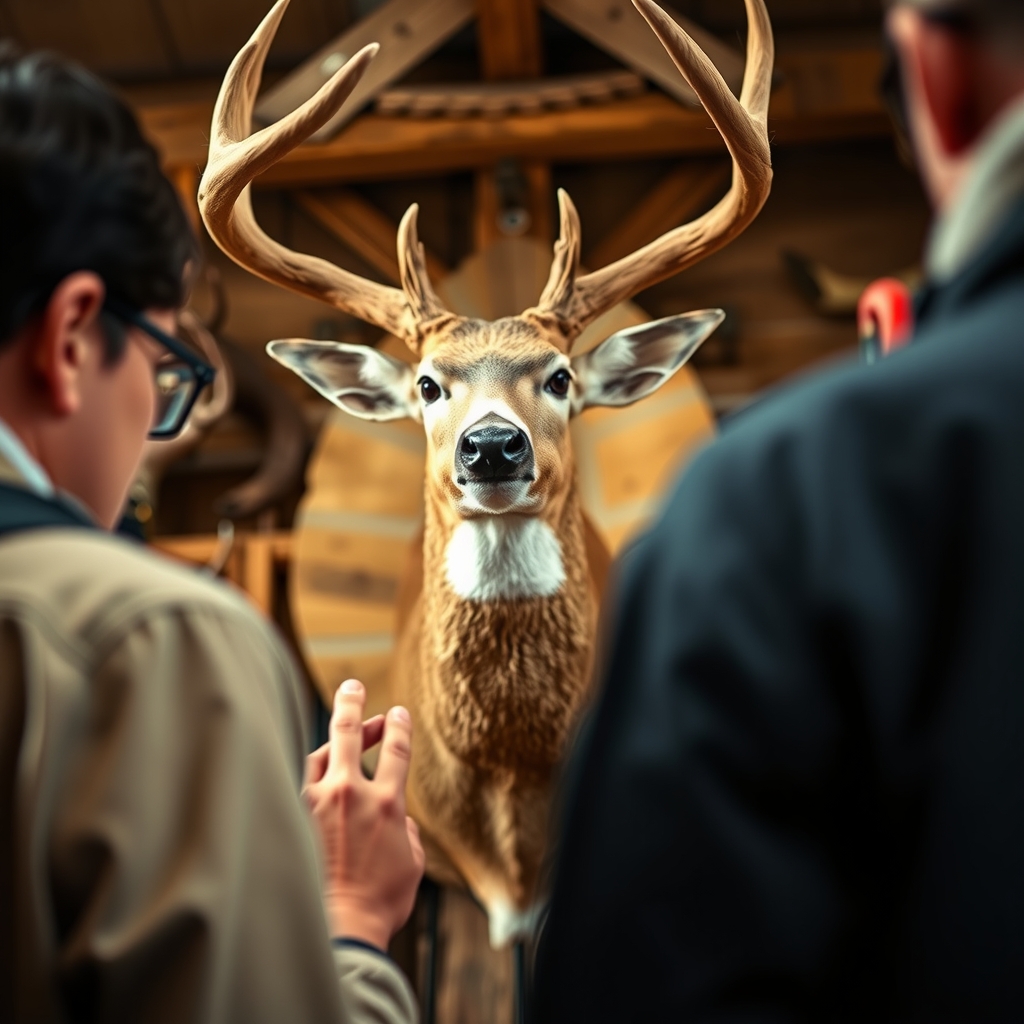
What Are the Key Indicators of High‑Quality Deer Taxidermy Near Me?
High-quality deer taxidermy is defined by anatomically accurate forms, professional hide tanning, and precision detailing around the eyes, nose, and ears. When searching for exceptional craftsmanship locally, collectors must look past superficial aesthetics and evaluate structural integrity to ensure museum-quality longevity.
Materials Used
Top-tier specimens rely on high-density polyurethane foam manikins rather than outdated paper-mache or wood-wool cores. Premium taxidermy demands professionally wet-tanned capes; salt-cured or dry-preserved hides will inevitably shrink, crack, and shed hair over a five-to-ten-year span. High-grade convex glass eyes with realistic pupil orientation and cast ear liners ensure the thin cartilage retains a natural shape without curling at the edges.
Mounting Methods
The mounting technique reveals the taxidermist’s mastery of musculature and proportion. Look for seamless hide alignment along the back of the neck, secured with modern hide paste that prevents skin slippage. High-end shoulder mounts feature fully defined muscle striations, prominent brisket definition, and lifelike posture. For larger presentations, such as pedestal mounts, assess the stability and balance of the internal armature anchoring the piece.
Finish and Detailing
Examine the fine focal points closely. The teardrop ducts (lacrimal glands) and nostrils must display moist, lifelike tucking painted with durable lacquer, avoiding thick, rubbery epoxy buildup. Confirm authenticity by checking antler burrs for natural color rather than artificial staining, and ensure the hair retains its natural luster without dull chemical residue.
How Does Location Influence Deer Taxidermy Near Me?
Location dictates the long-term durability, acquisition cost, and regulatory compliance of deer mounts due to regional climates and wildlife laws. Evaluating regional variables ensures you acquire resilient North American game mounts suited to your environmental conditions.
Regional climate plays a critical role in hide preservation. Specimens constructed in humid coastal environments are vulnerable to mold and dermestid beetle infestations if not treated with systemic bug-proofing during the tanning process. Conversely, arid regions accelerate hide shrinkage around the nose and eye orbits. For collectors considering reviewing local vs online outlets: taxidermy shop near me, cross-country logistics require climate-controlled freight to prevent transit-induced thermal cracking—a standard practice detailed in shipping protocols by the U.S. Fish and Wildlife Service.
Geography also impacts species availability and pricing. Sourcing white-tailed deer mounts across the Midwest often yields superior antler mass and thick winter capes at competitive price points compared to the smaller Coues deer native to the Southwest. Similar regional dynamics affect other trophies; for instance, collectors selecting the best bear shoulder mount for your home often look to northern corridors for prime hide density. Finally, state-level regulations govern the sale and transfer of native wildlife; states such as California, Texas, and Pennsylvania impose strict permit requirements on commercial mount transfers that local buyers must verify prior to purchase.
Which Prerequisites Should Collectors Have Before Purchasing?
Before acquiring any piece, collectors must establish a realistic budget, confirm adequate display space, select a preferred mounting style, and possess basic maintenance knowledge.
- Budget Planning – Allocate 10‑15 % of the total project cost for ancillary expenses such as custom pedestals, lighting, and insurance. For example, a museum‑quality shoulder mount priced at $2,200 may require an additional $300‑$350 for a climate‑controlled display case.
- Space and Display Requirements – Measure the intended wall or floor area and add a 12‑inch clearance around the piece to allow for proper viewing and cleaning. A life‑sized deer mount typically occupies 6 ft × 4 ft; ensure the room maintains 65–75 °F and 45–55 % relative humidity, as recommended by the U.S. Fish and Wildlife Service for preserving organic specimens.
- Preferred Mounting Style – Decide between shoulder mounts, pedestal mounts, or taxidermy rugs based on décor goals. Rustic interiors often favor a full‑body rug, while luxury settings may opt for a lifelike posture on a custom pedestal.
- Basic Maintenance Knowledge – Understand routine dusting with a soft brush, quarterly humidity checks, and annual professional conservation. Neglecting these steps can lead to mold growth or loss of the museum‑quality finish.
By confirming these prerequisites, collectors reduce the risk of costly re‑mounts and ensure that the chosen deer taxidermy near me piece integrates seamlessly with existing décor and long‑term preservation plans. For further guidance on selecting premium specimens, see the How to Find Authentic Premium Taxidermy for Sale in 2026 guide.
What Is the Step‑by‑Step Evaluation Process?
The evaluation follows a systematic, five‑step protocol that verifies reputation, visual fidelity, documentation, structural integrity, and provenance.
Research Seller
Begin by reviewing the seller’s industry standing. Check for certifications from the North American Taxidermy Association and read at least three recent client testimonials. A reputable vendor typically responds to inquiries within 24 hours and provides a clear return policy.
Inspect Visuals
Request high‑resolution photos that include close‑ups of the antler base, skin seams, and mounting hardware. Compare the lighting in the images to a known reference; inconsistencies may indicate retouching. For a shoulder mount, verify that the antlers are positioned in a natural, lifelike posture without visible glue lines.
Request Documentation
Ask for certificates of authenticity, species verification, and any CITES permits if exotic material is involved. Documentation should list the taxidermist’s name, the date of mount, and the source of the specimen. This step is critical for North American game mounts and for exotic species such as those featured in the Nilgai Mount Buying Guide: Exotic Texas & Asian Game.
- Examine mounting integrity – ensure the skull is securely anchored and the skin is taut without stretching.
- Assess finish quality – look for a uniform matte sealant, free of streaks or overspray.
- Verify provenance – confirm the specimen’s origin matches the seller’s description, especially when searching for “deer taxidermy near me” options.
Completing these steps provides confidence that the acquired piece meets museum‑quality standards and will retain its value for years to come.
Common Mistakes to Avoid When Choosing Deer Taxidermy
Evaluating deer taxidermy near me requires a critical eye to avoid acquiring substandard pieces that degrade quickly or violate game laws. Buyers often compromise on quality by overlooking technical flaws or failing to verify legal documentation prior to purchase.
Avoid these four critical mistakes when selecting a mount:
- Ignoring Provenance Documentation: Acquiring mounts without proper harvest tags, transfer permits, or state documentation can lead to legal forfeiture. Review our guide on Where to Source Legal Taxidermied Animals for Sale to ensure compliance with state and federal game laws.
- Overlooking Mounting Flaws: Asymmetrical ear placement, visible stitching seams, drummed skin around the neck, or unnatural eye alignment indicate sub-par workmanship. A museum-quality white-tailed deer shoulder mount must feature clean hair tracking and precise anatomical detail.
- Selecting Mismatched Size: Placing an oversized full-pose piece in a low-ceiling room destroys the visual balance of a space. Ensure the scale of the mount complements the room’s dimensions and architectural focal points.
- Opting for Cheap Materials: Older or budget taxidermy often utilizes wood wool or papier-mâché cores instead of high-density polyurethane forms. Inexpensive glass eyes lacking realistic nictitating membranes or proper depth also reduce the overall lifelike posture.
| Mount Issue | Visual Indicator | Impact on Quality |
|---|---|---|
| Drumming | Skin pulls away from form in concave areas (e.g., tear ducts) | High risk of cracking and skin separation over time |
| Shrinkage | Exposed clay or foam around nostrils and lips | Diminishes realism; indicates improper hide tanning |
| Poor Symmetry | Misaligned ears or unnatural twist in the neck pose | Distorts natural anatomical accuracy |

How to Ensure Long‑Term Care and Preservation?
Maintaining museum-quality deer mounts demands strict environmental controls and routine preventive maintenance to safeguard hide integrity. Proper preservation preserves both monetary value and visual appeal for decades, whether managing shoulder mounts, pedestal mounts, or life-sized pieces.
Execute the following preservation protocols to protect your investment:
- Control Humidity and Temperature: Maintain ambient indoor temperatures between 65°F and 72°F with a stable relative humidity of 40% to 50%. Rapid fluctuations cause hide expansion and contraction, leading to seam splitting and hair slip.
- Implement Regular Gentle Cleaning: Dust the mount monthly using a soft compressed air duster or a soft-bristle camel hair brush, wiping strictly in the direction of the hair lay. Clean glass eyes using a cotton swab lightly dampened with ethyl alcohol.
- Avoid Direct Sunlight: Position mounts away from windows, skylights, and high-UV artificial lighting. Direct sunlight bleaches hair shafts, turning rich brown whitetail coats into dull, faded gray over 12 to 24 months.
- Implement Pest Prevention Measures: Inspect the hide base and ear canals quarterly for signs of dermestid beetles, clothes moths, or carpet beetles. Apply commercial taxidermy insect repellents annually and keep display spaces sealed.
For additional details on evaluating structural integrity prior to purchase, consult our comprehensive resource on Buying Museum-Grade Taxidermy Mounts: 2026 Guide to maintain your collection efficiently.
Where Can You Buy or Sell Deer Taxidermy Near Me?
Deer taxidermy near me can be sourced or liquidated through four primary channels: the Taxidermy Warehouse marketplace, regional auctions and shows, vetted online platforms, and estate‑sale or consignment services.
- Taxidermy Warehouse Marketplace
- Access a nationwide inventory of museum‑quality shoulder mounts, life‑sized pieces, and taxidermy rugs.
- Use the site’s built‑in appraisal tool to receive a rapid, data‑driven valuation within 48 hours.
- For sellers, the “Buy‑Now” feature guarantees payment within 5 business days after inspection.
- Local Auctions and Shows
- Identify at least three regional events per year; the top three in 2026 are the Midwest Game Expo (June), the Pacific Northwest Wildlife Fair (September), and the Southern Heritage Taxidermy Auction (November).
- Register early to obtain a bidder’s number and request a pre‑auction condition report.
- Bid increments typically start at $150 for a standard deer shoulder mount and rise in $25 steps.
- Reputable Online Platforms
- Choose platforms that verify seller credentials and provide high‑resolution imaging; examples include Taxidermy Warehouse’s partner sites and specialty forums.
- Look for listings that include a detailed provenance, taxidermy style (e.g., lifelike posture), and a return‑policy window of at least 30 days.
- Secure payment via escrow is recommended to protect both buyer and seller.
- Estate Sales and Consignment Options
- Contact professional consignment houses that specialize in North American game mounts; they typically charge a 20 % commission on sales.
- Provide documentation of acquisition and any prior restoration work to streamline the appraisal process.
- Schedule a pickup or delivery within 7 days of acceptance to avoid storage fees.
For broader context on premium selections, see the Top Exotic and Native Taxidermy to Buy in 2026. Comparative insights on mounting styles are available in the Black Bear Shoulder Mounts vs Full Body Displays: Buyer Guide.
Frequently Asked Questions
What should I look for in the mounting base of deer taxidermy?
Inspect the internal mannequin and structural hardware to ensure the form is rigid, level, and free of shifts or degradation. High-grade shoulder mounts and pedestal mounts require reinforced anchor points embedded securely within the polyurethane form to prevent sagging over time. High-density wood plaques or custom habitat bases must also feature seamless joins, durable finishes, and flush-mounted heavy-duty hangers capable of supporting the full weight of the specimen.
Can I ship deer taxidermy across state lines?
Yes, non-endangered North American game mounts such as whitetail and mule deer can generally be transported across state lines, provided they comply with state wildlife regulations and the federal Lacey Act. Interstate transit requires proper documentation proving lawful harvest or legal commercial acquisition. Specialized freight crating is recommended for finished pieces, life-sized pieces, and delicate antlers to prevent transit damage.
How do I verify the species and age of a deer mount?
Species identification relies on distinct morphological characteristics, including antler tine configuration, metatarsal gland placement, and facial coloration patterns. Determining the age of the physical mount involves inspecting hide condition, tanning flexibility, and evidence of historic restoration, whereas biological age at harvest is typically verified through dentition records or official harvest documentation. Professional appraisals by certified wildlife specialists offer definitive authentication for estates and collectors.
What is the typical price range for museum‑grade deer taxidermy in 2026?
In 2026, museum-quality deer taxidermy typically ranges from $1,200 to $2,800 for custom shoulder mounts, depending on form complexity and antler size. Advanced pedestal mounts and bespoke wall presentations frequently command between $2,500 and $4,500 due to extensive habitat detailing and specialized finishing. Historic, world-class scoring trophies or elaborate life-sized displays can significantly exceed these figures on the commercial secondary market.
How quickly can Taxidermy Warehouse purchase my unwanted mounts?
Taxidermy Warehouse provides expedited nationwide acquisition services for single specimens, extensive private troves, and estate liquidations. Valuations are typically completed within 24 to 48 hours following digital submission of clear photographs and specimen details. Once terms are accepted, payment is disbursed promptly, accompanied by coordinated, professional logistics to handle on-site retrieval anywhere across the country.
Are there any legal restrictions on displaying deer taxidermy at home?
Private residential display of legally acquired deer mounts carries virtually no legal restrictions for collectors or interior designers within the United States. However, restrictions frequently apply to the subsequent resale, transfer, or commercial display of native wildlife depending on individual state game codes. Retaining original harvest tags, transfer receipts, or commercial invoices protects the legal status and long-term liquidity of the collection.
Conclusion
Evaluating deer taxidermy requires an expert eye for anatomical accuracy, flawless hide preparation, and sound structural craftsmanship. Whether assessing local finds or curating an extensive collection of North American game mounts, insisting on museum-quality standards safeguards both aesthetic appeal and resale value. When seeking to expand a display or liquidate inherited specimens quickly and professionally, consult Taxidermy Warehouse for industry-leading valuations, premier specimens, and seamless nationwide logistics.